The Universal Standard
A Constitutional Vitalist Reflection on the Exaltation of the Cross

I’m back with another entry in my series of Cruciform Five Phases (CFP) readings of the 12 Great Feasts of the Orthodox liturgical year. As with last time, this will be of greatest interest to Orthodox readers but is also relevant to anyone interested in the Five Phases of Traditional Chinese Medicine and how CV applies that framework. In my last post, I gave a lengthy explanation of what I mean by “Cruciform Five Phases” and various disclaimers about what I am and am not claiming, so please check that out before reading this one.
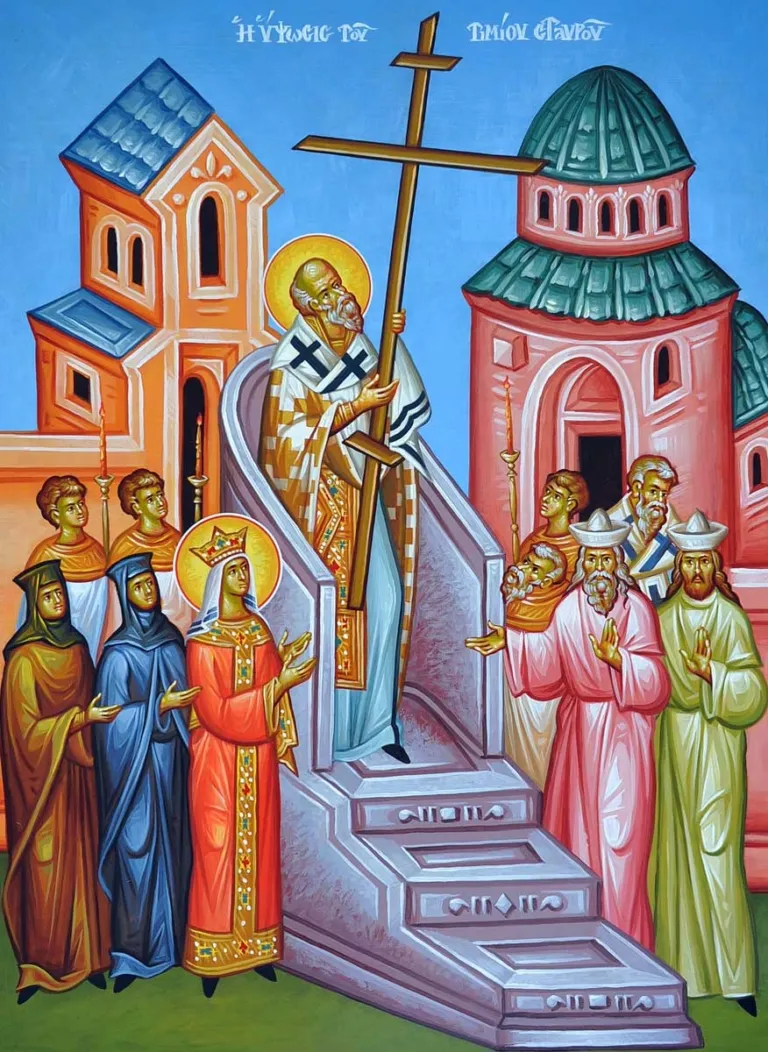
Soon after the Nativity of the Theotokos, we’re blessed with another Great Feast, the second of the Church year: the Universal Exaltation of the Precious and Life-giving Cross. In brief, the feast relates to two historical events. The first is the finding of the Life-giving Cross in the year 326 AD, when St. Empress Helen, Equal-to-the-Apostles, journeyed to Jerusalem to find the long hidden True Cross, and it was uncovered and exalted before all the people. This is the event depicted on the icon of the Feast. We also remember today the return of the Cross to the Christian world in 628 AD, after it had been taken by the Persians 14 years prior. With these particular historical moments of the Cross’ exaltation as the touchstone, the Feast commemorates the Cross in all its salvific, cosmological, and transcendent significance. As always, I defer entirely to official Church sources for explanations of this Great Feast.
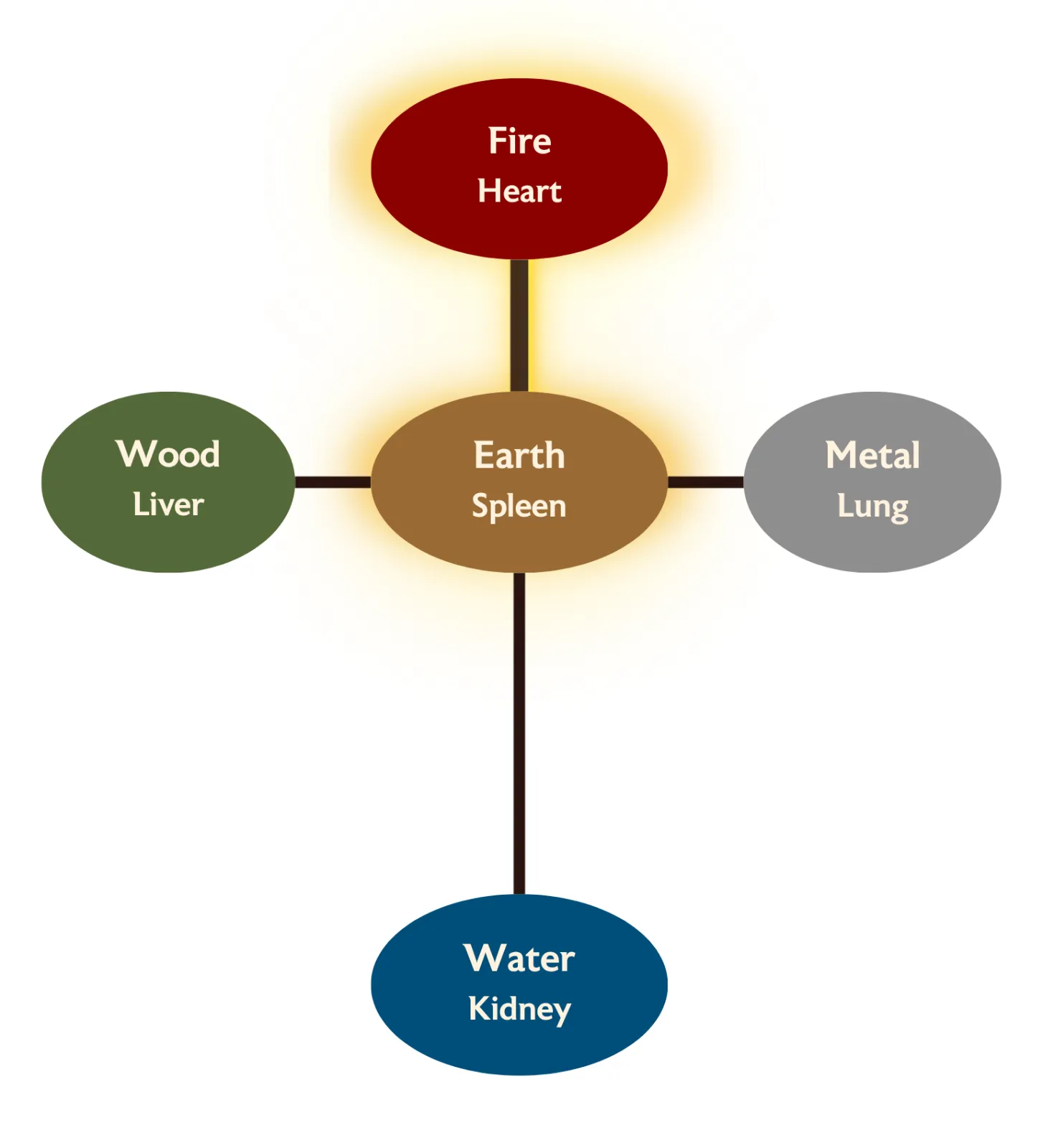
From a CFP perspective, I read today’s commemoration of the Cross being raised to universal exaltation as a feast of Metal directing Wood.
Metal relates to boundaries, form, and standards of judgement (as we see in the filtering function of organs like the Lungs). This is an ideal register to reflect on the Cross being venerated as the standard to which we are meant to conform our whole life. After its discovery, the exalted Cross was used by the Patriarch to bless the North, South, East, and West. With all the world ordered around it, the Cross becomes an object of cosmic orientation.
In the Cross, God clearly distinguishes His transcendent ideal of victory (the triumph of self-sacrificial divine love) from earthly preconceptions of what victory looks like. At the same time, the tangible and civilizational dimension of the Cross is fully visible, as we remember St. Helen’s saintly use of authority leading to the physical recovery and display of the long-hidden Cross and the holy sites related to the Lord’s Passion.
In addition to the pleasantly literal symbolism of the Cross being physically made of Wood (from the Matins service for today: “Let all the trees of the forests rejoice, for their nature hath been sanctified by Him Who planted them in the beginning”) there is more reason to read Wood as the secondary Phase of this feast. Metal provides boundaries, but movement, direction, and initiation all belong to Wood (notably the Liver). With the Cruciform standard of discernment in place, it’s through Wood that humans can actually act and move in harmony with that standard. Put differently, the Cross being raised as the standard for all history and the universe is Metal, and humans responding correctly to this Exaltation is Wood.
The seasonal Phase resonance of this Feast is particularly strong, as we’re in the midst of what TCM and CV deem Metal time, when nature and the body’s vital energy begin to turn inward and downward after the heights of summer vitality. Experiential and dietary inputs are sorted, and excess is released. And just at this moment, the Church points us toward the ultimate example of healthy rightly-oriented Metal.
This seasonal moment of Metal can sometimes dry the body, particularly the Lungs and the skin. Eczema may appear, we can develop coughs, emotional grief can even surface. When Metal is unbalanced, it can feel like a constricting cold process of severance and release. But the Exaltation of the Cross shows that the chastening and seemingly restrictive aspects of Metal are life-giving, not life-destroying.
Remarkably, this is the only one of the 12 Great Feasts that is always a fast day, even if it falls on a Sunday (the weekly celebration of the Resurrection). “‘On the day of the Elevation, cheese, and eggs, and fish we dare not touch,’ because the veneration of the Cross consists in the mortification of the flesh” (quoted from here). Yet, the Feast is celebrated with a sense of gladness and victory, with angels and men triumphantly exalting the Cross together, and the Cross even being called the “all-honorable standard of joy.” Our appetites are restrained for a day precisely to help us feel the true happiness of orienting our lives toward self-sacrifice and proper worship.
St. Theophan the Recluse (a wonderful19th-century Russian saint), makes an astonishingly CV-resonant comment on this feast:
“The honourable cross is brought out for veneration in the middle of Great Lent in order to inspire those who toil in fasting to patiently bear the yoke they have taken to the end. Why is this [also] done in September? Is it accidental? But there are no accidents for the Providential Wisdom that arranges all things. This is why: [in Russia], at least, in September the harvest is taken from the field. And so that some of the Christians might not feel too satisfied and say: “Soul, thou hast much goods laid up for many years; take thine ease, eat, drink, and be merry!” and so that others might not fall in spirit because of scarcity, the elevated cross is brought before all. It reminds the former that the support of well being is not possessions, but their bearing of the cross in a Christian, inner way, should God’s goodness bring external plenitude; and it inspires the latter to possess their souls in patience, through the certainty that they will go from the cross directly to heaven. Therefore, may some endure, knowing, that they are travelling a smooth path to the heavenly kingdom; and may the others enjoy external comforts with fear, not sealing the entrance to heaven against themselves.”
With specific seasonal reference to the harvested fields of the Russian autumn, the saint is essentially commenting on the how the Cross both cuts away excess and provides hope for those in scarcity. This is a wonderful description of healthy Metal. On one hand, it releases what in our bodies and our lives has become overabundant. On the other, it gives suffering definite form and boundary. The Metal of Exaltation points (as do all the feasts) toward the Fire of Pascha. The terrain medicine of the feast shows us how Metal provides crucial bodily form and boundary without being severity for its own sake.
When Wood (the secondary Phase of the feast), is unbalanced, it can turn into unfiltered self-assertion, a desire for expansion at all costs, and become movement that fears stillness. The feast shows us that movement and momentum mean nothing if not conformed to the universal standard of the exalted Cross. Rather than clinging to boundless motion, God incarnate allows Himself to be nailed in place. Agitated Wood wants maximum exercise of impulse and activation, while balanced Wood orients these things toward clarity, discernment, and right standards.
Scattered Fire can lead to self-promotion and insatiable hunger for material victory. The Exaltation grounds Fire in the reality that true victory can look on the surface like defeat and true triumph involves humble self-sacrifice.
Exaltation introduces a special fasting day within a long period of the Church year with no extended fasts (falling about a month after the Dormition fast, with a couple months still to go until the Nativity Fast). In doing so, it keeps Earth properly bounded, reminding us not to let abundance and comfort pile up so that they dull and burden our terrains.
When Water is depleted, feelings of stark fear can arise and make danger feel overpowering. The services for the feast refer to the Holy Prophet Moses using a tree to sweeten the bitter waters of Marah, describing this as a prefiguration of the saving work of the Cross. From this, we see that bitterness is real but is neither meaningless nor ultimate. The Exalted Cross reminds disordered Water that suffering is not endless, because God has entered into suffering and forever altered its meaning.
That’s all for now! After a few Orthodoxy heavy posts, next time I’ll be getting into the practical level of what makes CV so unique among health systems, specifically, how it determines its recommendations for healing.
Troparion of the Feast, tone 1
Oh Lord, save Thy People, and bless Thine inheritance
Grant Thou onto Orthodox Christians victory over their enemies
And by the power of Thy Cross, do Thou preserve Thy commonwealth